
Illustration: Neil
[–>
[–>
[–>
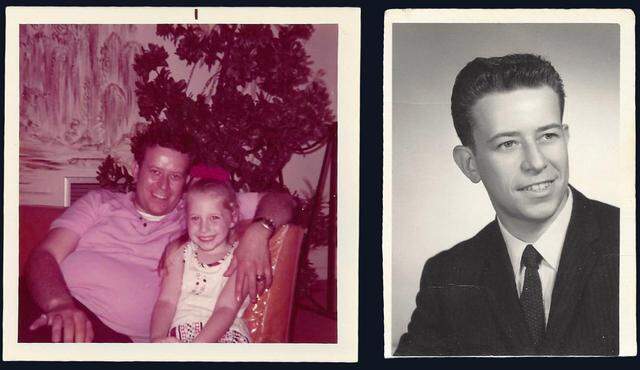
Martin Hochheiser was overjoyed when nurses told him he was going home to his North Miami Beach condo after a brief hospital stay — until the medical van began veering west toward Hialeah.
[–>
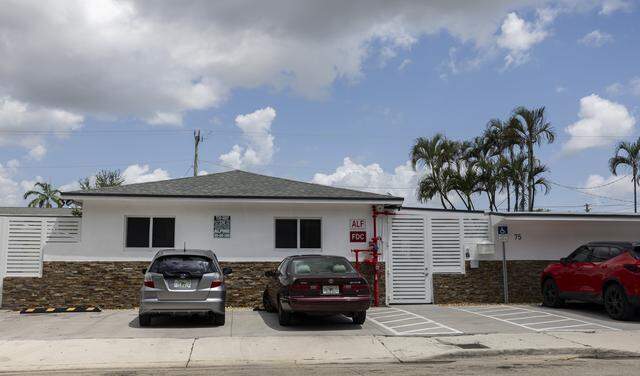
His dread turned to panic when Hochheiser, 79, was unloaded at Villa Rosa III, a 48-bed assisted living home with peeling paint, burglar bars, barren planters and a history of poor care. Inside, he discovered, residents shared deodorant and hairbrushes, ate watered-down scrambled eggs and lost their clothes in the laundry — until their shirts and pants reappeared on someone else.
[–>
Inspection reports of the place read like a remake of “Oliver Twist.”
[–>
“I am still hungry, because they give us a little bit,” one woman told a state health inspector. “We are not allowed to ask for more.”
[–>
Caregivers berated residents, in Spanish, inspection reports show; the home was cited for employing staff members who could not speak English. There were holes in the walls and feral cats, one of which slipped into a resident’s bed at night and licked her toes and back, she complained.
[–>
After Hochheiser vanished into state custody, it took days for his niece to find him. She frantically called his friends, police officers, emergency rooms.
[–>
“To not know where my uncle was for almost a week?” said Joyce Stout, who has had power of attorney for Hochheiser for 15 years. “There are people in the world who have nobody.”
[–>
[–>
Hochheiser’s disturbing story belies the myth of Florida as the golden destination for retirees in their sunset years. What happened to him could happen to any elderly person declared incapable of caring for himself or herself by a government caseworker in a state with nearly 5 million people aged 65 or older — a population that is rapidly growing in a “silver tsunami” projected to further strain an overburdened healthcare system.
[–>
Once they are labeled “vulnerable adults” by Florida’s Department of Children and Families (DCF), elders like Hochheiser can lose their autonomy, their homes and their dignity. They can lose control of their money, which the state spends on lawyers and professional guardians assigned to protect them, whether they need that assistance or not.
[–>
Decisions by DCF Adult Protective Services caseworkers depriving elders of their freedom are almost always made without court oversight and beyond public view. Almost 95% of elders removed from their homes statewide never appear before a judge and never consult with a lawyer, the Miami Herald found.
[–>[–>
[–>
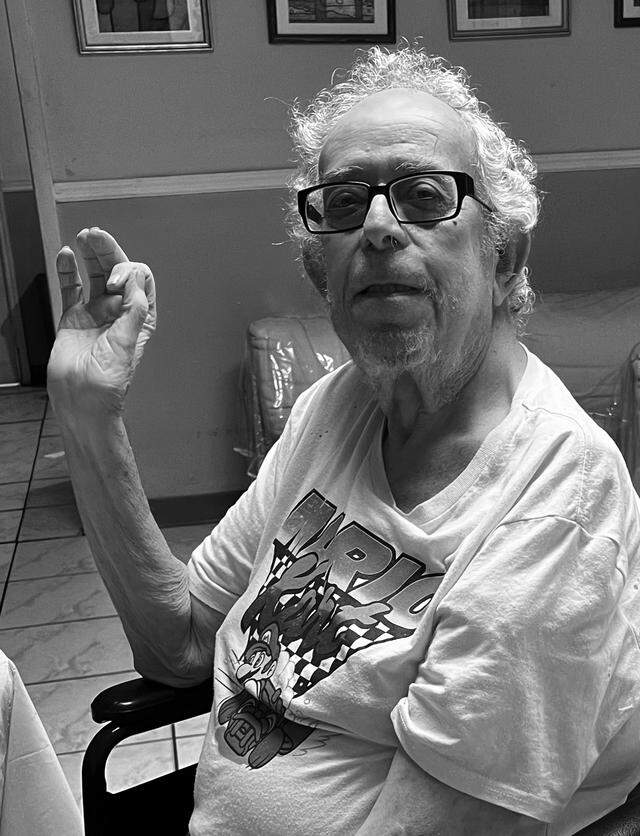
Hochheiser could have become another forgotten old man at another forgotten old folks’ home. But he knows he was fortunate. Fierce in mind and spirit, he protested the upending of his life. He had a niece who was able to help extract him.
[–>
“I told them I would report this as a kidnapping to the police,” Hochheiser said of his ordeal. “I told them, ‘I don’t belong here.’”
[–>
To evaluate Florida’s adult protection program, Herald reporters examined DCF Inspector General investigations, tape-recorded testimony from adult protection staff, medical records, personnel records, assisted living facility complaints, abuse hotline data, inspection reports and police reports. Reporters reviewed guardianship, probate and other court documents, corporate filings and real estate records. Reporters interviewed elders entangled in the adult protection system, their family members and friends. Reporters spoke to ALF employees and owners who were willing to talk.
[–>
The owner of Villa Rosa III, Michele Perez, said the home where Hochheiser lived had been under renovation for a few years, and “today it is a beautiful facility.” Residents at her homes are treated like relatives, she said, with home-cooked meals, daily activities and respectful, bilingual staff. “I have residents, family members, and guardians who are very content and happy at the facility,” Perez said.
[–>
Among the Herald’s findings: Between January 2021 and Nov. 1, 2023, the state took 11,395 elderly or disabled Floridians out of their homes without any judicial oversight. DCF filed only 211 court petitions in 2022, down from 306 the year before, then-Deputy Chief of Staff Mallory McManus wrote in an email.
[–>
When the Herald asked questions about whether elders were intellectually capable of consenting to be moved, the agency repeatedly refused to provide more recent data.
[–>[–>
Spouses, adult children and relatives with legal authority can be kept in the dark as to the whereabouts of their loved ones. Families told the Herald they were never consulted before a loved one disappeared to an assisted living facility, including homes with documented histories of neglect, ghost caregiver crews, misuse of medication, decrepit buildings and lousy, inadequate food.
[–>
“This is just so scary,” said Martha Lenderman, a former DCF mental health administrator who served on a task force to reform ALF laws. “This could be any one of us on a bad day.”
[–>
In Miami-Dade, the lack of oversight has been acute, the Herald found. Here, a lone DCF employee has been empowered to decide the fate of elders removed from their homes. She chooses where they will go, and she has been accused by her colleagues — and cleared by the department — of taking kickbacks from elder care home owners eager to fill their beds.
[–>
Elders taken into state care typically agree to be sent to homes chosen for them, DCF said.
[–>
“It is important to note that the majority of our removals are voluntary and are not court ordered,” a spokesman said.
[–>
But can such a decision truly be voluntary when an elderly or disabled adult has just been deemed a danger to themselves? Nina A. Kohn, distinguished scholar in elder law at Yale Law School, said elders can only volunteer to be relocated if they have been fully informed of their rights, and understand them.
[–>
“The question becomes, are people being treated as if they are voluntarily consenting to services who are not voluntarily consenting to services?” Kohn said. “You might have somebody who doesn’t understand that they have a choice. If you don’t understand that you can say no, is that voluntary? I would say it is not.”
[–>
The Herald found one case in which a 76-year-old woman was moved into three different assisted living facilities by DCF administrators, though records documented that her “cognitive level remains an issue.” The woman had Alzheimer’s disease, had been hallucinating, was being given psychiatric medications and lacked “capacity to consent,” records said.
[–>
Retired Florida Supreme Court Chief Justice R. Fred Lewis, who is now eminent professor of law and letters at Florida Southern College, criticized DCF’s policy of allowing caseworkers — who are seldom professional psychologists or social workers — to both remove elders from their homes and determine whether they’re competent to consent to the removal. Competency “can’t just be assumed, and it can’t be whitewashed,” he said. “You have to give people due process.”
[–>
“You don’t lose your civil liberties because you get old,” Lewis said. “I know of no other area of the law where people can get warehoused without any protection.”
[–>[–>
THE DISAPPEARED
[–>
Anyone can trigger an adult protection investigation by calling The Florida Abuse Hotline, 1-800-96 ABUSE. Calls come in about elders caught in financial scams or elders who are sick. Elders living alone who can no longer cook or clean, who stopped paying their bills or answering the door, who aren’t taking their meds or bathing themselves, who are lost or don’t remember to turn off a stove might get a visit from an adult protective investigator.
[–>
DCF’s Adult Protective Services program is supposed to work like its more widely recognized children’s counterpart: Investigators and caseworkers can take elders out of their homes when they appear to be at risk, make sure they are evaluated for physical and psychiatric illness and, if necessary, send them to live in ALFs or nursing homes.
[–>
But adult protection varies from child welfare in several ways that have profound consequences. Parents whose children are removed from their homes involuntarily have the right to appear before a judge within 24 hours. They are appointed lawyers if they cannot afford one.
[–>
The state’s elder protection law, Section 415 of the Florida Statutes, allows adult protection workers to impose their own judgment on elders’ cases and place clients without court supervision.
[–>
“As a society we’ve decided we don’t care to protect our seniors as much as our children,” said Professor Rima Nathan, director of the Claude Pepper Elder Law Clinic at Florida State University. She described 415 as “weird,” confusing and pocked with pitfalls for elders. “All these horror stories happen because due process isn’t respected.”
[–>
For many Florida elders, a visit from an adult protection investigator is the start of a one-way journey into a labyrinth.
[–>
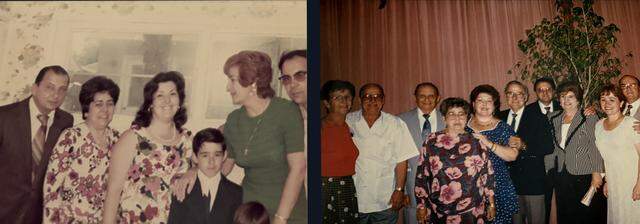
Take the case of Julia and Rosendo Padilla, naturalized U.S. citizens who emigrated from Cuba to Glendale, California. In 2001, the couple, who did not have children, retired to Miami in search of warmer beaches. They bought a two-bedroom condo with a balcony near the Intracoastal Waterway in Sunny Isles Beach. They had money in the bank.
[–>
He had worked at Kaiser Permanente, a healthcare company. She had worked at a jewelry store. Together, they had cleaned office buildings at night to save money.
[–>
“They were very hard-working people,” said Olga Perez, daughter of their best friends.
[–>
Around 2019, Rosendo Padilla, who survived colon cancer but was left weakened, asked Perez to draw up a power of attorney and make arrangements for him and his wife to finish their days at The Palace, a luxury ALF in Coral Gables, she said. The Palace told Perez it would cost about $14,000 per month for both of the Padillas to live there; she calculated that their savings was enough to cover it, given their ages.
[–>
Then DCF knocked on their door.
[–>
The Padillas were removed from their condo. Though they wanted Perez to handle their affairs, a judge appointed professional guardians instead. They were sent to a home that DCF chose, not the one they’d picked.
[–>[–>
[–>
They were split up and moved into separate rooms after decades of marriage.
[–>
“Padilla was very upset,” Perez said. “He said, ‘I don’t have clothes to wear.’ He told me it was a very sad place. He told me he didn’t have slippers so he had to be bare-footed. He asked me to send him clothes.”
[–>
But to what address? Perez had no idea. The location of the home remained a mystery.
[–>
Padilla had given Perez a phone number, but all her calls went into a void. She said she was transferred to an operator who never answered. She tried to reach a social worker who never returned her calls.
[–>
“He could never say where he was,” said Yvonne Cohen, Perez’s cousin in Miami, whose efforts to find the Padillas proved futile. “He didn’t know. And that is wrong.”
[–>
Cohen said it was as if Padilla had been kidnapped — the same word Hochheiser used to describe his forced move. “I want to get out of here. This place is very, very depressing,” he told Perez.
[–>
“And he was very depressed,” Perez said. “He said, ‘I don’t know who took my money.’”
[–>
Two guardians were paid by the hour from the couple’s savings account to manage their affairs, court records show. Their condo was sold in 2020 for $210,000.
[–>
Julia Padilla died on May 8, 2021, at age 96. All that was left of their nest egg was $57,533, which went to her husband. He died 19 days later. He was 92.
[–>
By the time a disposition hearing was held in probate court, the Padillas’ hard-earned assets had dwindled to $4.58. Enough to buy a cafecito.
[–>
Perez and Cohen learned of their friends’ death from a Herald reporter. “What [DCF] I did that, and the court allowed it – it was a travesty,” Cohen said.
WHERE DO ELDERS GO?
[–>
The Padillas’ descent into a DCF black hole isn’t a rare occurrence in Miami.
[–>
An Inspector General investigation cited repeated claims that elders were improperly deposited in substandard homes. When the investigator asked for a spreadsheet documenting removals, mentioned in testimony by several supervisors, the agency’s then-adult protection director in Miami emailed a copy. But it was the wrong spreadsheet, the 2022 report said, and the “only one he could locate” on a shared agency drive.
[–>
The Herald asked for spreadsheets, too — and got only fragments of data, none more recent than 2021, none resembling any sort of tracking system.
[–>
At elder care homes listed in the report as beneficiaries of DCF placements in Miami-Dade, one home failed to investigate or tell authorities when a resident said he was “choked and raped.” Another did not investigate a claim that a resident was stabbed by a fork-wielding manager, records show.
[–>
Residents’ clothing was taken from them in some homes, while owners and caregivers used residents’ rooms as storage spaces for their own belongings, inspectors said. Residents’ possessions and keepsakes were tossed in the garbage. Residents were deprived of essential healthcare and medication. And when they wanted to complain — as is their right — they had no telephone or information on whom to call.
[–>
Seniors said they felt like “inmates” thrown in “jail.”
[–>[–>
Two miles away from Villa Rosa III — where Marty Hochheiser was placed — and nearly a straight shot down East Fourth Avenue in Hialeah, sits the former Villa Rosa IV, a 72-bed home. Now called The Palms — records show the home changed ownership both in 2018 and 2019 — the ALF has been cited by health regulators for 90 violations since 2012.
[–>
When caregivers there left a suicidal resident hanging by the neck from his room’s sprinkler system without giving the man immediate aid, Florida’s healthcare watchdog agency took the uncommon action of asking a judge to shut down Villa Rosa IV.
[–>[–>

[–>
Wilfredo Ortega Rodriguez, 58, was sent to Villa Rosa IV with psychiatric diagnoses of schizophrenia and bipolar disorder, a health department report said. Ortega Rodriguez “did not want to live anymore,” though records show he did not sign a Do Not Resuscitate order.
[–>
After lunch one Sunday, Ortega Rodriguez was found by his roommate unconscious on the floor with a white cord tied around his neck and attached to a fire sprinkler, a Hialeah police report said. An employee, summoned by the roommate’s screams, told investigators Ortega Rodriguez had no pulse, so he left him tethered to the taut cord.
[–>
“They said to wait, that help was on the way,” the employee said of his bosses. “I did not give him CPR; you give CPR if the person is alive, and he was not.”
[–>
When police officers arrived, they untied the man.
[–>
Failing to give potentially life-saving aid is among the most serious violations by an assisted living facility, said the state healthcare agency, which took steps to revoke Villa Rosa IV’s license.
[–>
But in the months following the death, DCF moved in or kept at least 17 clients at the home, records obtained by the Herald show.
[–>
The state sent 36-year-old Douglas Vonbrandt there. He had an intellectual disability and “was unable to care for himself,” records state. Vonbrandt ran away after dinner on an August night. He told his roommate he wanted to go back to Key West, and asked him to come along. Then he climbed out the window.
[–>
Villa Rosa IV staff members said they conducted rounds every 30 to 40 minutes. But the ALF’s records showed residents were, in fact, eyeballed every two hours.
[–>
That gave Vonbrandt plenty of time to “elope,” social service parlance for clients who run away. Police found him “in good health” two months later walking along Palm Avenue in Hialeah. They took him back to Villa Rosa IV. It appears he never made it to Key West.
[–>
Michele Perez, the owner of Villa Rosa III and half-owner of The Palms, formerly Villa Rosa IV, said residents in her family-operated chain have always been treated with tender respect.
[–>
“If not for our residents, we would not be in business at all. So we do put their interests first,” Perez said. “We run and create facilities that are dignified enough to put our own families and loved ones in.”
[–>
‘THEY HATED US’
[–>
Martin Hochheiser, now 82, acknowledges he probably needed help when a DCF Adult Protective Services investigator knocked on his door. He was living alone and had trouble doing housework. An outsider might have concluded he was a hoarder.
[–>
What Hochheiser and his niece objected to was the unilateral decision to ship him to Villa Rosa III.
[–>[–>

[–>
Following an evaluation at Larkin Hospital, Hochheiser was moved against his will by a state employee named Tania Hernandez, he says. DCF documents obtained by the Herald show Hernandez, the one and only placement specialist for Miami-Dade, ordered that Hochheiser be sent to live at Villa Rosa III, and later listed the ALF as Hochheiser’s emergency contact.
[–>
Hernandez listed herself as Hochheiser’s “nearest relative or guardian” — though the agency’s records stated that his niece, Joyce Stout, had power of attorney.
[–>
Hernandez did not respond to several calls, texts and emails from the Herald, and declined to talk when a reporter went to her house.
[–>
DCF knew Stout was responsible for her uncle. Her phone number was listed on his intake form.
[–>
Stout lives in California. She was en route to her own retirement party from her job as an elementary school counselor when she got a call from a family friend that her uncle had been “taken from his home” by the state.
[–>
“I start calling,” she said. “Days go by. I can’t find him. I don’t know where he is.”
[–>[–>
[–>
Hochheiser, a retired accountant, has a biting wit and the mental acuity to make decisions for himself. He does not need a guardian, a Miami judge later ruled. Still, nobody wanted to listen to Hochheiser.
[–>
“The victim loses control when he’s not consulted at placement. Not every victim lacks capacity. A lot of our victims have capacity, but should not be living by themselves and need placement,” Eneida Senrra, a former DCF adult investigator, said in a sworn, recorded interview with DCF’s inspector general. But, “victims are never asked.”
[–>[–>
There are more than 800 licensed assisted living facilities in Miami-Dade County. Yet Hochheiser was moved from his condo in North Miami Beach to Larkin Hospital in South Miami to a Hialeah ALF that’s a 25-mile drive from his home. He objected, explicitly and repeatedly, he said.
[–>[–>

[–>
“He was sent far away from his two family friends,” Stout said. “And they were the only two people in the world who would go see him.”
[–>
Finding her uncle was just the beginning. Finding a new home for him close to his neighborhood, scheduling therapy sessions, shepherding his money — these arrangements were all made more difficult by an agency that behaved as if it, not Hochheiser’s family, knew what was best for him, Stout said.
[–>
Stout, who has a doctorate in clinical psychology and has worked in the mental health field her entire career, understood what her uncle needed, and Hochheiser himself wasn’t shy. But caseworkers dismissed their input, she said.
[–>
“I had faith and trust in the system,” Stout told the Herald. “The system is broken, and the system failed my uncle.”
[–>
When Hochheiser was deposited at Villa Rosa III, he found the conditions appalling. He described a “filthy and unsanitary roach motel” that provided no medical or psychiatric care run by surly staff members who, with one exception, did not speak English.
[–>
Hochheiser, who could not return to his condo due to a mold infestation, said one dull day melted into another at Villa Rosa III. Residents were offered no activities — no music, no books, no exercise and no TV, because the antennae hookup to an aluminum pie pan didn’t work.
[–>
“There we were, the inmates of Devil’s Island,” he said. “They hated us.”
[–>
They sat out on the hot patio and amused themselves watching a group of inept roofers at the home. Occasionally, one of them would sneak out and bring back snacks from 7-Eleven. The monotony was interrupted by “unbelievably crappo” meals of macaroni and cheese, pizza, “mystery meat,” watered-down eggs and canned string beans. No dietician or cook asked Hochheiser about his nutritional restrictions, he said.
[–>
“I’m on a renal diet and need to avoid processed food,” he said. “You could die there depending on your diet.”
[–>
Residents were not only forced to share toiletries but each other’s clothing, which staffers mixed up in the laundry.
[–>
“I arrived wearing black jeans, a $40 belt and a red polo shirt. I never saw those clothes again,” said Hochheiser, dressed in sweatpants and a Mario Kart T-shirt that somehow entered his wardrobe during his Villa Rosa stay. “You’d see a guy wearing the same thing for three weeks and then it was in your closet.”
[–>
Perez, Villa Rosa III’s owner, said Hochheiser “does have the right to feel the way he feels.” But she disputes his description of conditions. Residents are served healthy home-cooked meals, she said. Most caregivers speak English as well as Spanish. Each bathroom is stocked with toiletries. There have “always been activities in every facility every single day.”
[–>
“Villa Rosa is a great facility,” Perez said. “We have residents who have lived with us for many years, and they are very content here.”
[–>
Hochheiser’s ticket out of Villa Rosa was COVID. After contracting the infection, he was sent to Hialeah Hospital for treatment, then to a rehab facility. A judge rejected the guardianship petition initiated by DCF, and Hochheiser was back in control of his life. He found an assisted living facility in North Dade.
[–>
“I escaped from that hellhole,” he said. “And I’m never going back.”
#Warehoused #protection #Florida #locks #seniors #nursing #homes