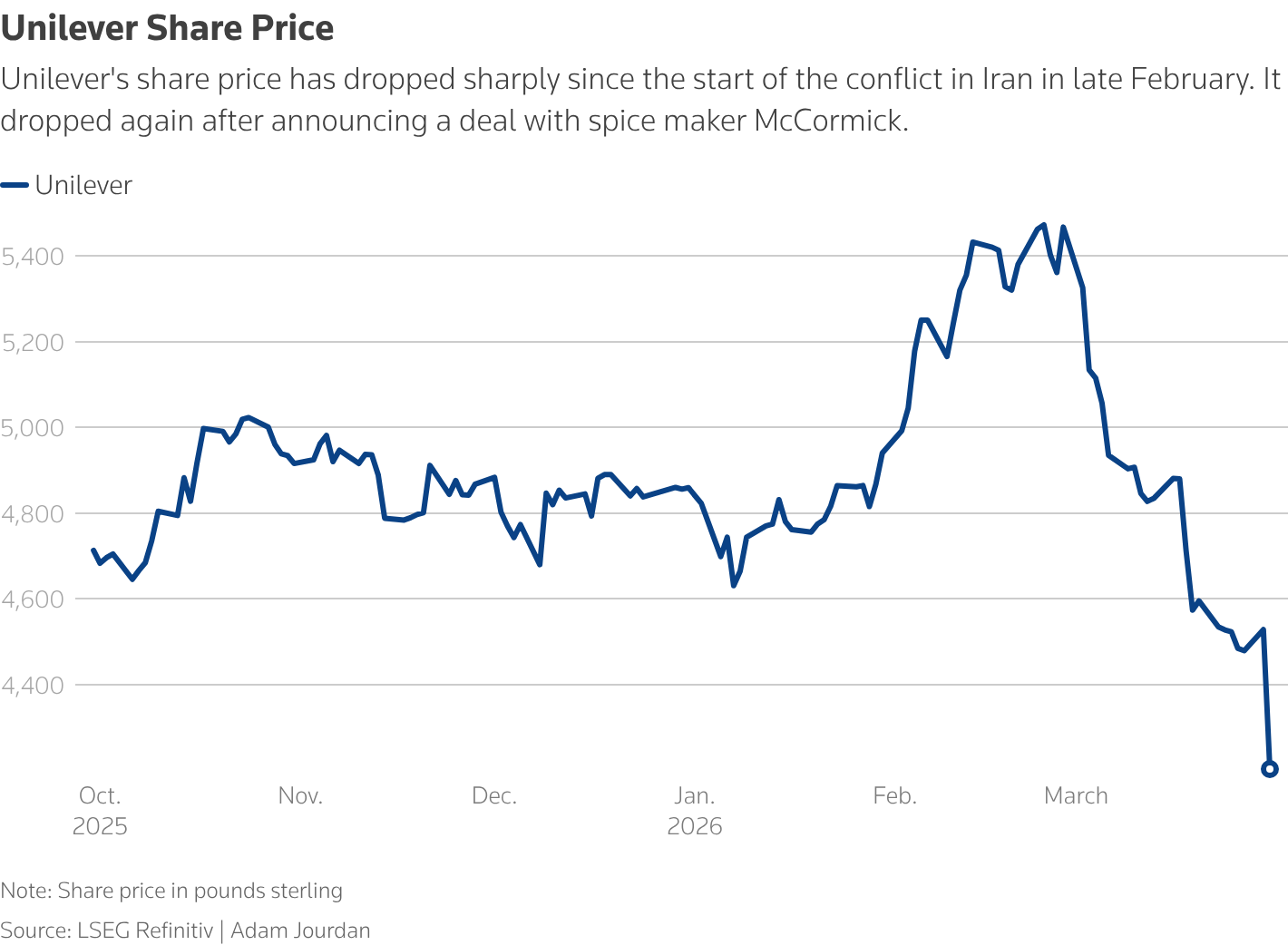
LONDON, April 1 (Reuters) – Almost 15 years ago, Fernando Fernández, then a senior executive at Brazil’s Unilever, made a bold bet on hair care and beauty and quickly expanded the then-newly acquired TRESemmé brand into a big money generator in the huge South American market.
The 59-year-old Argentine is now CEO, returning to his roots and carving out food brands for the vast consumer goods company, from Magnum Ice Cream to Hellmann’s Mayonnaise, and making two big deals since taking the helm last year.
sign up here.
The recent spinoff has turned the company into a much leaner beast with a focus on beauty, personal care, and home care. Fernandes has spent most of his 38-year career at Unilever selling products from Dove soap to Surf laundry detergent.
“This is the right step at the right time to build a simpler, sharper, higher-growth Unilever,” Fernandes told analysts on a conference call after the McCormick deal was signed.
“We are taking a leading position in a highly attractive category, strengthening our exposure to fast-growing regions such as the US and India, and creating a €39 billion home and personal care pure-play business.”
The prize will be worth it in the end
Without food and ice cream, Fernandes will rely on Unilever’s 23 home, beauty and personal care “power brands”, including Dermalogica, Pond’s, Sunsilk and Schiff, which account for the bulk of Unilever’s sales.
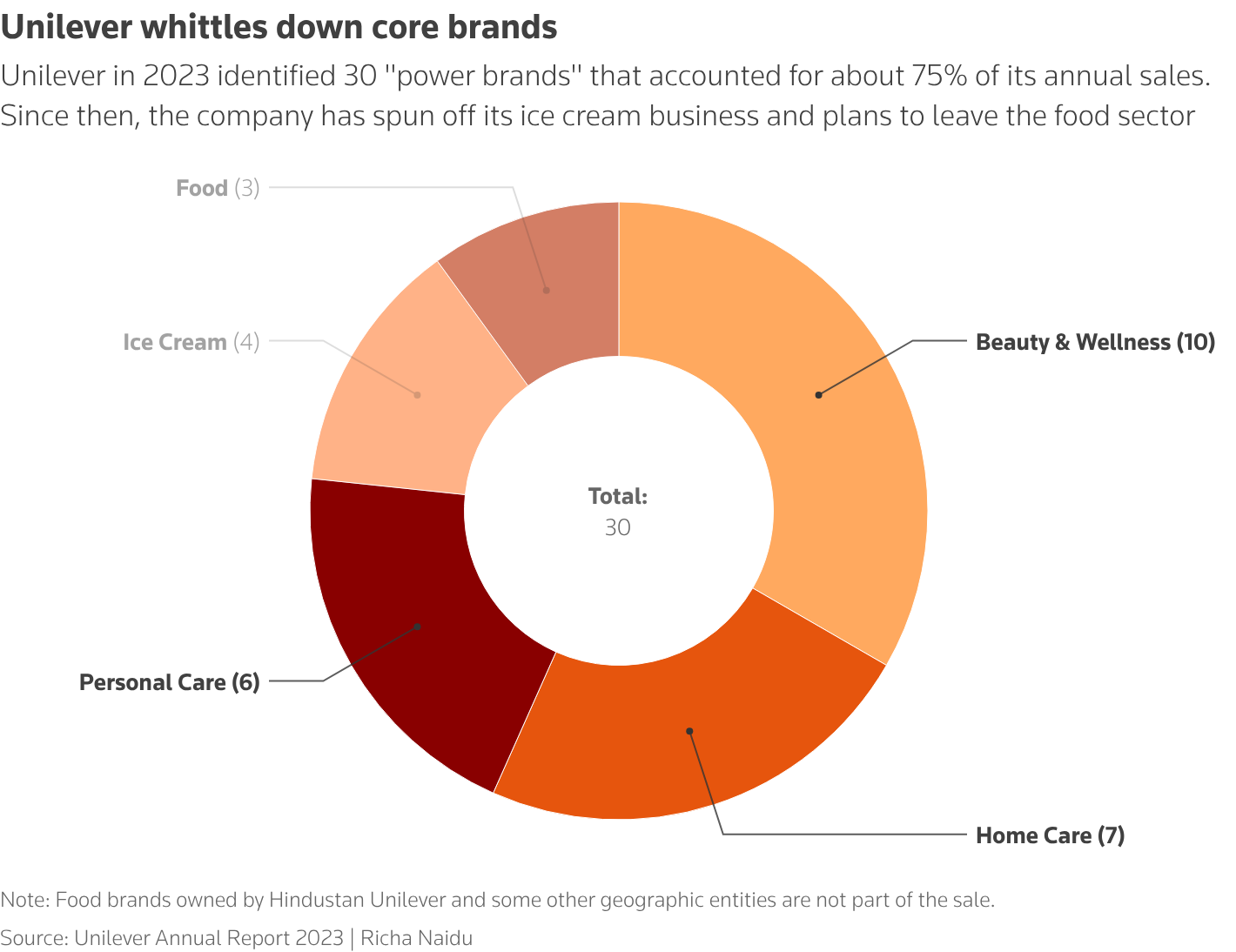
But some investors see long-term gains in fast-growing beauty, personal care and home care products.
“The company has transitioned from operating in two different industries to focusing on a narrower group of brands in rapidly growing markets.”
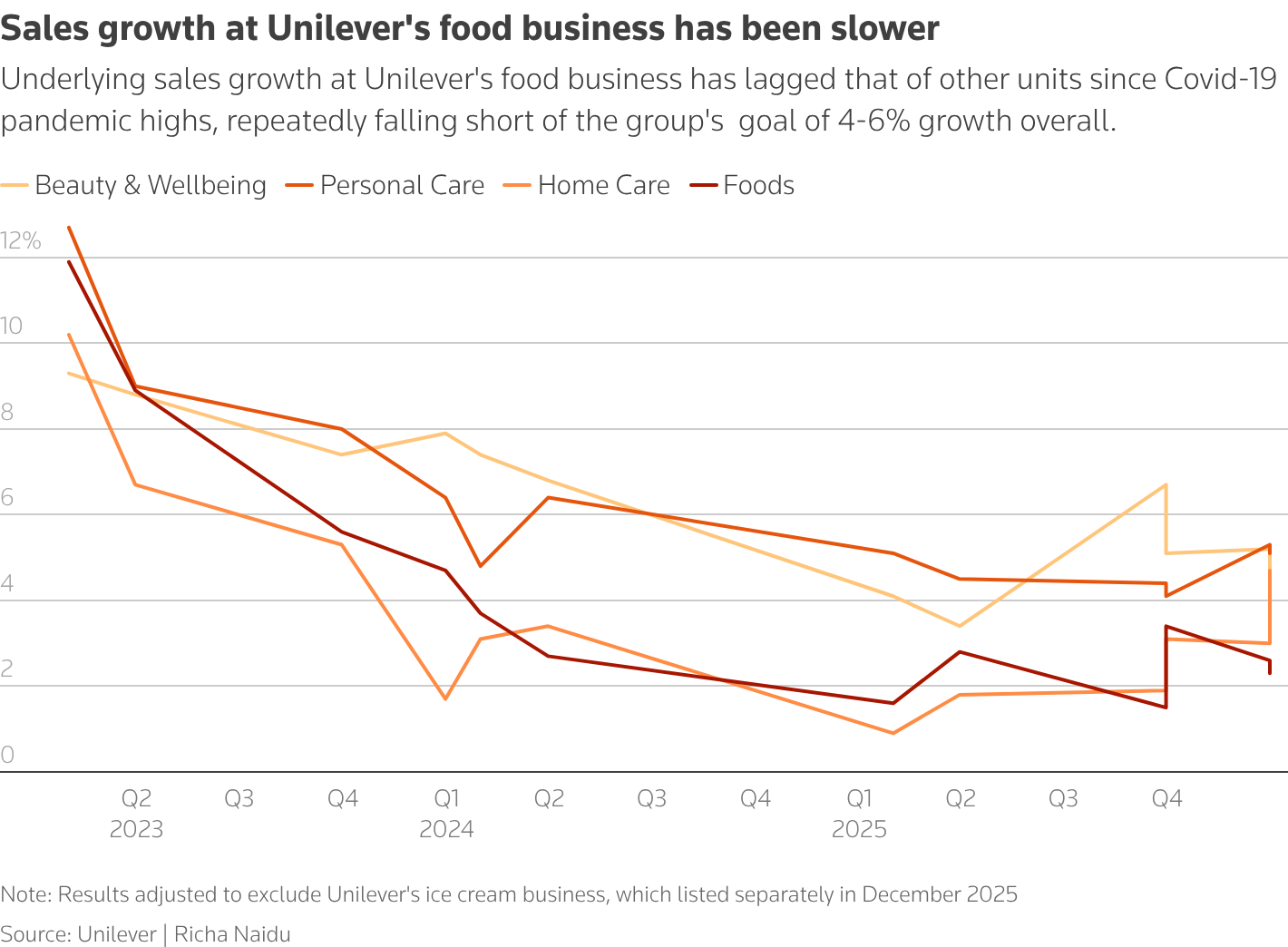
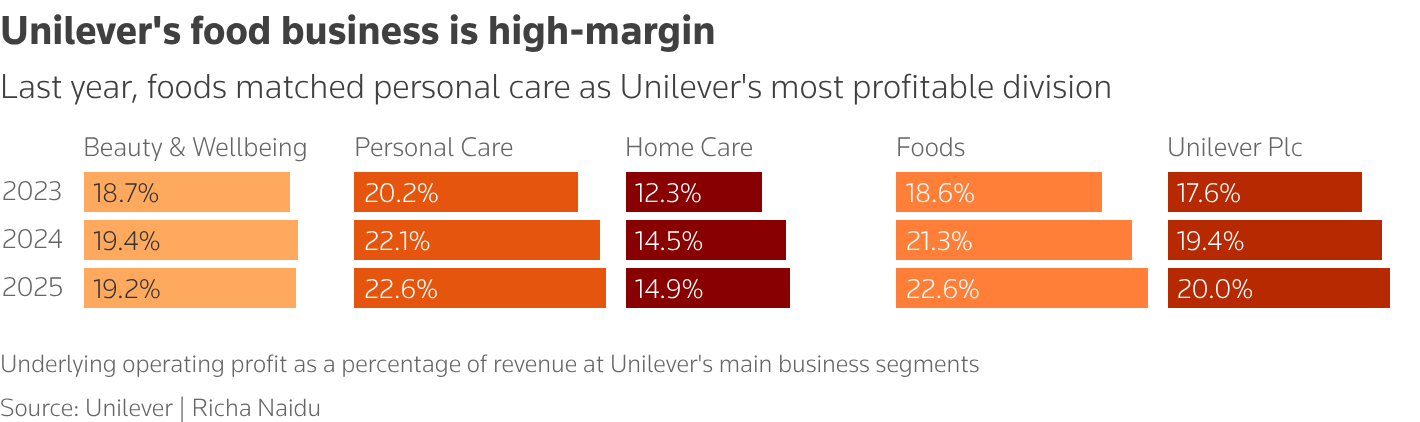
The food business has high margins, but sales growth has lagged behind other divisions, weighing on Unilever’s goal of increasing annual sales by 4% to 6%.
“The prize money for the pure-play home and personal care company will be worth it in the end,” said Warren Ackerman, an analyst at Barclays.
Relocation could lead to higher valuation for Unilever
Unilever’s investors and board have pushed for change in recent years, including billionaire activist shareholder Nelson Peltz, who owns a $1.73 billion stake in the company.
This has put pressure on Unilever’s two CEOs, most recently Hein Schumacher, who was fired after failing to rationalize the company’s portfolio quickly enough. Mr. Fernandez, who was finance director at the time, was promoted to speed up the process.
The deal marks a sharp change in direction for Unilever after it spent much of the last century acquiring food and drink brands from Marmite to Colemans to Horlicks.
But the rise in consumer health consciousness and the rise of GLP-1 weight loss drugs in recent years has eroded demand for processed foods and investor confidence, and Unilever also faces stiff competition from cheaper private labels.
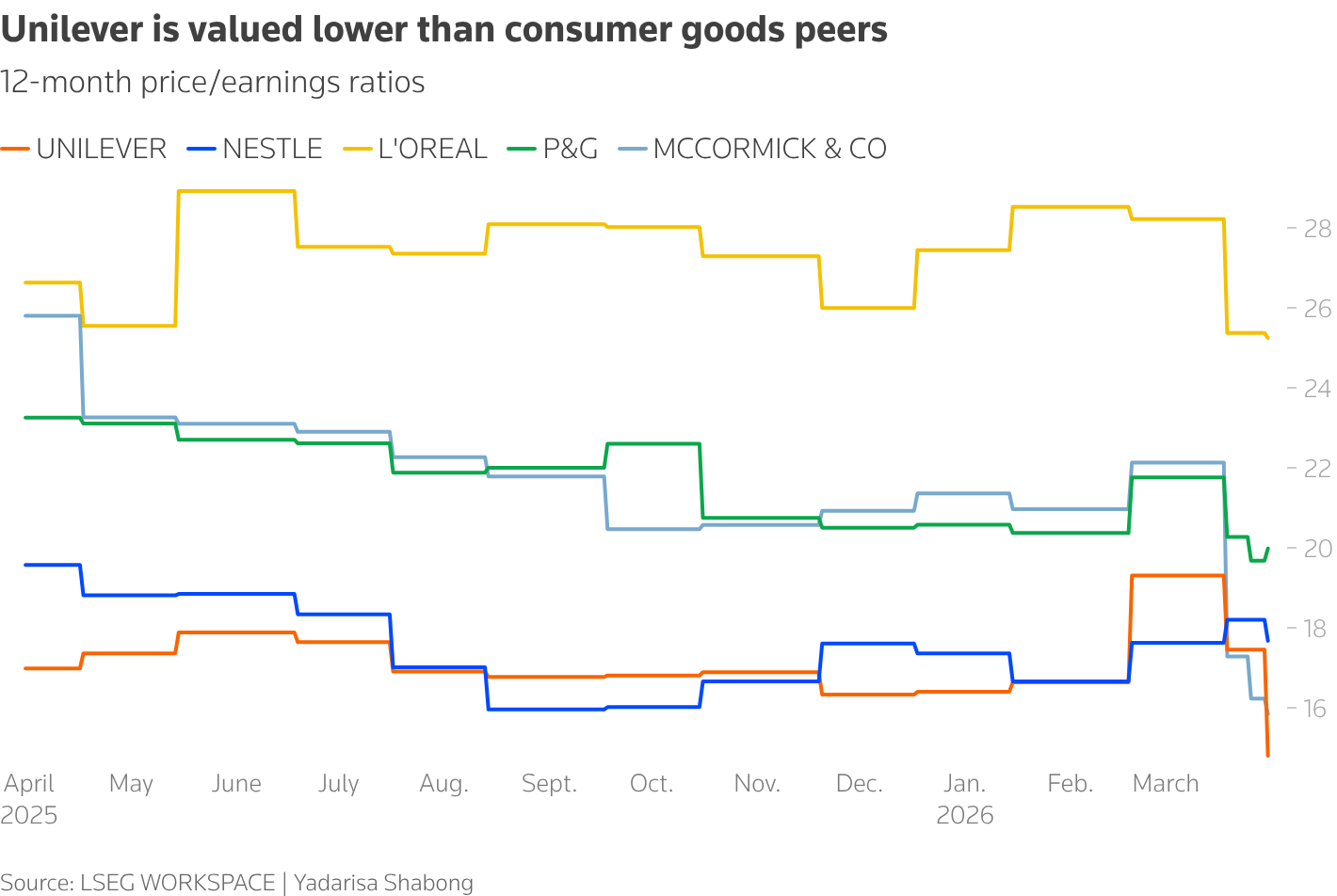
“Unilever has historically traded at a discount to pure HPC peers like L’Oréal and Procter, in part due to the impact of the low-growth food category,” said Will Knott, portfolio manager at Unilever investor NinetyOne.
“Obviously there is potential for a rating change, but it won’t happen overnight. The market will want to see clean execution through the transition.”
(1 dollar = 0.8627 euro)
Report by Richa Naidu. Additional reporting by Alexander Marrow. Editing: Adam Jordan and Kirsten Donovan
Our standards: Thomson Reuters Trust Principles.


#Unilever #CEO #Fernandes #roots #health #beauty #transformation