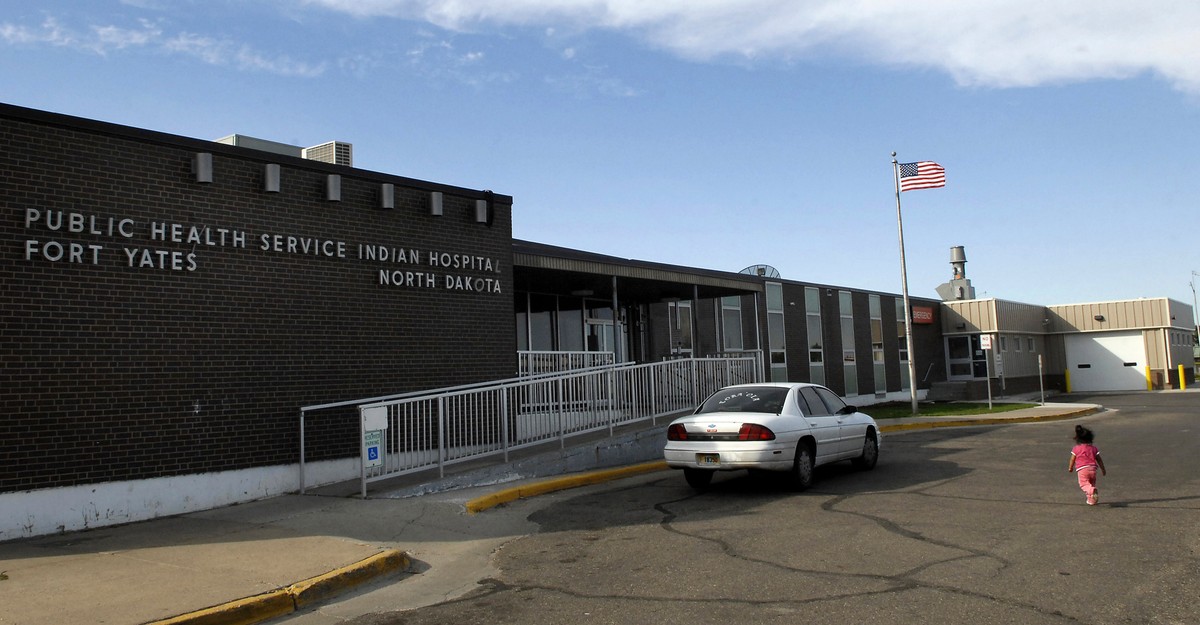
Last week, the Department of Health and Human Services finally implemented a plan it first outlined to several senior officials nearly a year ago. Reassigned them to positions in the Indian Health Service.
Many of the reassigned employees — a group that includes at least six top officials at the National Institutes of Health, the CDC and other agencies — have been on administrative leave since last spring, when they were abruptly removed from their jobs with no explanation or indication of how long the leave would last. So they were shocked last week when they received an unannounced phone call, followed by a letter informing them of their new role and an April 8 deadline to decline or accept.
In most or all cases, accepting these new roles will mean a major career change and require a move across the country. Many senior HHS officials are based in Maryland, where the FDA and NIH are located, or near Atlanta, where the CDC is headquartered. Recent letters list reallocations to Arizona, New Mexico, Oklahoma, North Dakota, South Dakota and more. If the officials accept the reassignment, they are expected to start their new jobs by May 26 at the latest. If they refuse, the officials are expected to be completely removed from the federal civil service.
I spoke with two of the letter recipients and several former HHS employees who were also placed on administrative leave last spring. All requested anonymity to avoid professional repercussions. For some of the reassigned employees, April 1 will mark one year since they were placed on administrative leave, not long after HHS first proposed reassignment to IHS via email. Two recently reassigned employees also told me that last week was the first time they had heard from HHS since May or June 2025, when they were asked to submit their resumes. Having been at a loss for so long and then given so little time to make this choice, some officials feel that HHS has spent the better part of a 12-month period pretending it didn’t lay off some of its highest-ranking employees. “Honestly, it’s ridiculous,” one official told me. HHS did what it promised. It took exactly one year to do it.
Asked for comment, HHS spokeswoman Emily G. Hilliard said in an email that HHS is committed to improving IHS and that “each executive who joins IHS will strengthen its leadership and support our mission.”
There is no doubt that IHS needs more staff, especially in rural and remote areas. For many years, the agency’s vacancy rate has hovered around 30% (and even higher in some regions for certain roles). Last spring, when dozens of HHS employees were first placed on leave, HHS Assistant Secretary for Human Resources Thomas J. Nagy Jr. wrote to them in an email that American Indian and Alaska Native communities “deserve the highest quality of service, and HHS needs people like you to provide that service.” In January, IHS also announced what it called the “largest hiring initiative” in its history to address staffing shortages, noting that it has the full support of Department of Health Secretary Robert F. Kennedy Jr., who has said tribal health is a priority.
However, both the reassigned officials and the tribal health experts I spoke with questioned how well the new reassignments fit IHS’s current needs. The main characteristic of the reappointees as a group was that they were senior officials with extensive experience in administrative leadership. Many operated departments with hundreds of employees or more. Among those who received the proposed reassignments last spring were directors of multiple NIH institutes, leaders of several CDC centers, top executives at the FDA’s Center for Tobacco Products, bioethicists, human resources managers, communications directors, and technical information officers. What the IHS needs most, however, is “hands-on clinical talent” such as doctors and nurses, David Simmons, director of government affairs and advocacy at the National Indian Child Welfare Association, told me. “Communications people, human resources people, researchers? They’re not going to be useful people on a day-to-day basis,” Simmons said. “At some level, you have to ask the question, why are they sending these people in?”
Last week’s letter, also signed by Nagy, listed new IHS positions, several of which would be located at small hospitals in some of the country’s most rural and remote areas, officials said. These roles have titles such as “chief of staff” and “senior advisor,” but the letter does not list specific responsibilities for those positions. I asked one official if their credentials matched their reassigned role in any way. “Zero,” they told me. The letter says senior executives who accept the reassignment will keep their current salaries, at least about $150,000, but many of the reassigned senior executives are paid much more than that, two officials said. One NIH official said that although IHS’s budget is a small portion of NIH’s budget, IHS will likely cover the salaries of reappointed employees. The official told me that as far as they knew, they would be earning as much as their new bosses.
To build trust and effectively provide care, health officials need to deeply understand the needs of tribal communities and understand local culture, Simmons said. As of 2023, American Indians and Alaska Natives had lower life expectancy at birth than other racial and ethnic groups in the United States. Indigenous people are particularly susceptible to diseases such as asthma, diabetes, and substance use disorders. The tribe also has a long history of severe mistreatment at the hands of the federal government. But the officials I spoke to said they were not aware of any reassignment of anyone who identified as Indigenous or had an extensive background in working with such communities. Last year, Deb Haaland, a Pueblo of Laguna member and Democratic candidate for governor of New Mexico, criticized the relocation proposal, calling it “disgraceful” and “disrespectful.” The experts I spoke to also did not know that HHS then sought to thoroughly consult tribal leaders about these reassignments. In at least one case, three current and former HHS employees told me that when a reappointed employee tried to contact the new hospital, the new supervisor expressed confusion about who the employee was and why he had contacted them in the first place. (Hilliard did not answer my questions about whether he consulted IHS or tribal leaders about the reassignment, how qualified the reassigned officers were to meet the agency’s needs, or why HHS was making the reassignment now.)
Meanwhile, health experts across the country are feeling the loss of these employees at the top echelons of HHS, particularly from agencies focused on public health. “At the local health department level, we rely on their expertise,” Phillip Huang, director of the Dallas City Health Department, told me.
It is unclear what prompted HHS to ultimately end administrative leave for these employees. Many officials feared the leave would last indefinitely, before choosing to resign like many of their colleagues. The action may have been prompted by new Office of Personnel Management guidance that was announced after the employees were initially placed on leave and takes effect in 2026. It would limit administrative leave related to staff changes to 12 weeks. The end of March coincides with that limit.
Whatever the trigger, the officials I spoke with said they feel much the same as they did a year ago. “They clearly don’t want us to take these jobs and want us to leave voluntarily,” one official said. Firing federal employees is difficult unless there is a specific reason, and not a single employee I spoke to could identify a valid reason why they or their colleagues had been in federal positions since last spring. Officials I spoke to universally emphasized that it was essential to fill the IHS with qualified personnel, but added that they were not meeting the requirements. Several officials also said they feared it would be more difficult for IHS to attract the talent it needed if many of the redeployed officials rejected the government’s offer. HHS’ goal “is to evacuate people. I think that’s been the goal from the beginning,” another official told me. “It’s cruel, unkind and unprofessional.”
Some recipients of the letters still feel extreme pressure to accept reassignments. One person said he was only weeks away from full retirement eligibility, but he couldn’t make it before the acceptance deadline passed. “We may have to move,” the official said. And if HHS pays for a portion of the relocation costs, as federal policy states, they must remain in federal employment for at least a year. (The option of early retirement exists, albeit with fewer benefits; another official told me he plans to take that option and take another job elsewhere.) Still, officials feel a renewed sense of finality even as they consider the decision. His administrative leave had come to an end, and his hopes of returning to his former institution were gone.
#year #purgatory #HHS #employees