
Add VegOut to your Google News Feed. 
The conventional wisdom about healthy aging is almost entirely physical. Please eat well. Move frequently. Please get enough sleep. Please do a blood test. Optimize. The wellness industry has turned the post-65 body into a project, a machine to be maintained with the right inputs. And most people believe that if they stick to a formula that includes the right ratio of omega-3s and fiber, an ideal number of steps, and a perfect sleep schedule, they can live well into their 80s with their performance intact. But that framework seems to be missing something very basic and too simple to be taken seriously.
Variables that no one optimizes
Research shows that the cumulative effect of strong social bonds over a lifetime can actually slow cellular aging. Friendships, family connections, and community connections aren’t just things you have to have. They have the potential to put measurable brakes on the biological aging process at the molecular level.
This discovery alone should rewrite all longevity protocols on the market. It wasn’t.
This is because in the world of wellness, there is a bias towards things that can be controlled by the individual. You can buy better food. You can download fitness apps. Track your sleep with a ring on your finger. But you can’t buy the experience of someone sitting across from you noticing that your smile doesn’t reach your eyes and saying, “No, how are you doing?” Really Are you doing it? ”
And I’m waiting. That’s the important part. I’m waiting.
There is a difference between someone asking how you are as a greeting and someone asking how you are as a genuine inquiry. The first is the social script. The second is the act of paying attention, an act so rare that many people over 65 can go weeks or even months without experiencing it.
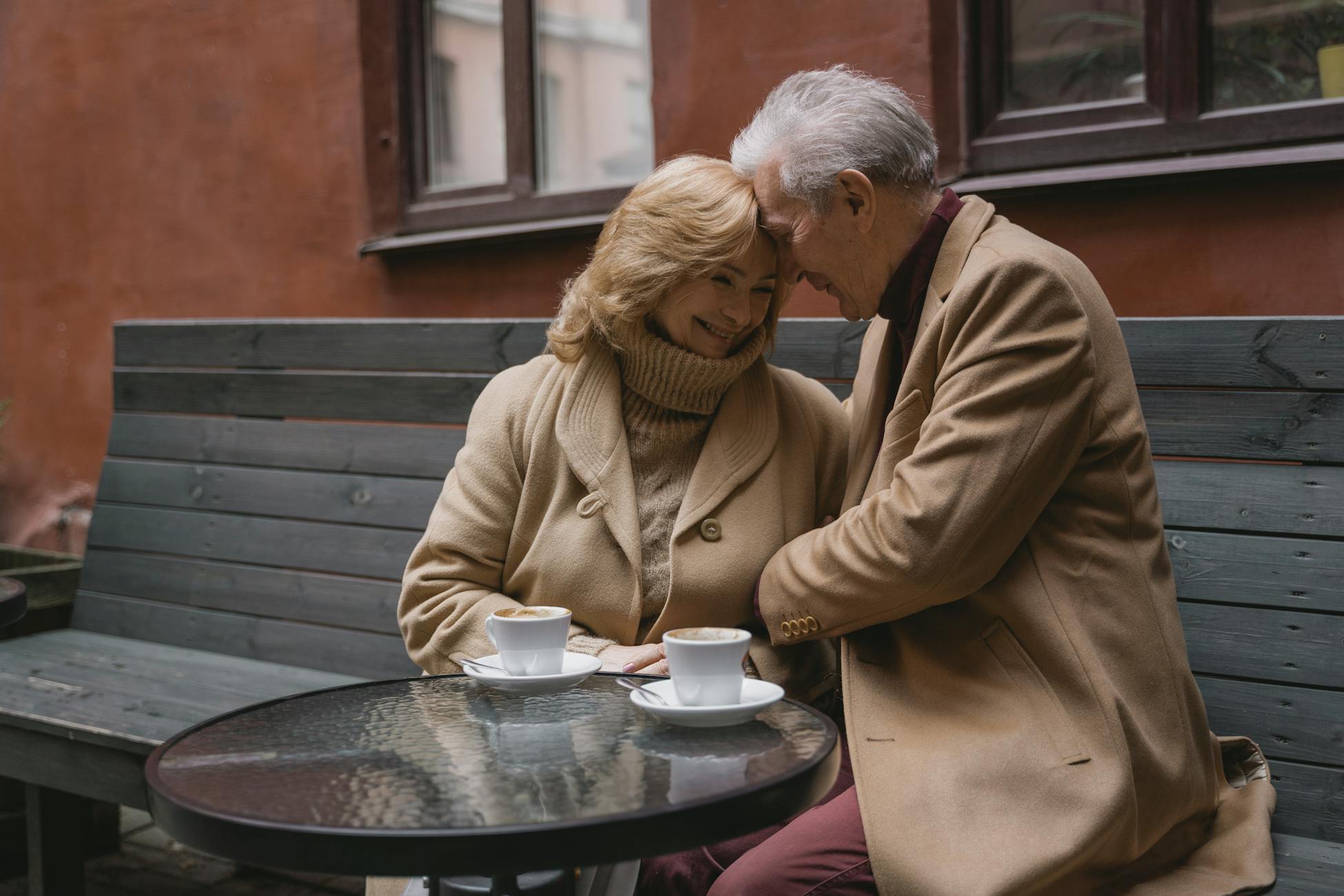
How loneliness really affects organizations
We tend to think of loneliness as an emotional problem, something that makes us sad. This composition greatly understates the damage. Research shows that social relationships can slow cellular aging, and the reverse is also true, meaning that a lack of meaningful connections can accelerate cellular aging. Your cells may age faster when no one is paying attention to you.
Research shows that chronic loneliness can trigger an inflammatory response, affect stress hormone levels, and affect cardiovascular health, cognitive function, and metabolic regulation over time. Exercise can counteract some of this problem. Diet can help. But neither can fully compensate for what happens to a body that has no one to rely on.
I’ve been thinking about this a lot, in part because I’ve seen people I know focus a lot of energy on tracking biomarkers and optimizing their diets even as their social worlds quietly shrink. The spreadsheet becomes more detailed. The table will be empty.
It feels like something in that equation is deeply broken.
Difference between company and connection
Common objection: “I’m not isolated. I meet people all the time.” Golf buddies. Book club member. Neighbors waving. A couple who meet for dinner every few months. None of these are the same as having someone who knows how to read the silence between your words.
Social contact and social connection are not synonymous. Even if you are surrounded by pleasant acquaintances, you may be missing the only relationship that serves as a true witness to your inner self. Studies of centenarians in longevity populations suggest that daily habits other than diet and exercise, particularly those related to social rituals and emotional presence, are associated with extreme longevity.
The specific quality of attention is very important. Evidence suggests that different types of social interactions may elicit different physiological responses. Superficial contact doesn’t seem to register in the same way as asking someone and then doing it. Sitting feeling uncomfortable with your honest answer. The second scenario may reassure your nervous system that no matter what you’re carrying, you’re not alone.
When that signal is repeated over time, it can change the body’s baseline stress response.
Why does it disappear after the age of 65?
Retirement removes the greatest source of human contact that most people have on a daily basis. Work is often mundane in terms of providing deep connections, but it provides an infrastructure for serendipitous interactions. Conversation in the hallway. Lunch with a co-worker who noticed you seemed to be in a bad mood. Ordinary closeness sometimes creates unexpected moments of seeing the real thing.
Even if that footing crumbles, people who have had one or two truly respectful relationships tend to maintain stable relationships. People who relied on workplace proximity instead of real intimacy will fall off a cliff. And they don’t always notice the fall.

The friends you kept in your 40s and 50s will become the social infrastructure that will keep you around or not after your 70s. By the time someone turns 65 and realizes that their contact list is full of people who never ask a second question, rebuilding becomes exponentially more difficult. It’s not impossible. Just more difficult.
Geographical mobility further complicates the problem. Adult children scatter. A long-time friend is moving to be closer to her grandson. Neighborhoods are turned upside down. The physical proximity that underpinned so many deep friendships is gone, and the phone, while better than nothing, lacks the tangible presence that our nervous systems recognize as safe.
Frequently asked questions structure
The question “How is it really?” only brings about change if the person asking the question can live with the answer. Most people can’t. Most people ask follow-up questions as a means of problem-solving. They want to fix, advise, minimize or redirect. That instinct comes from genuine consideration. However, the effect is truncated. The person asked the question quickly learns to answer the short version. A version that won’t offend anyone.
The rare person who asks and waits tells you something different. “I’m not worried about what you’ll say.” I’m not trying to fix you. I’m just here.
That kind of presence is a skill. Some people arrive naturally. Most people learn it at some point through their own suffering, by being listened to and recognizing the value of it. Some people never learn.
I’ve been listening to this research for a while because it goes against what we’ve been sold for decades: the idea that independence and individuality are the ultimate goals. I ended up creating a video called “You’re NOT Special” (https://www.youtube.com/watch?v=ftOGA32vc40) about how our obsession with being unique may be what keeps us isolated in the first place.
For the recipient, being listened to in this way can have physiological effects. Your heart rate may slow down. Breathing may become deeper. The vigilance that solitude trains your body (always on the lookout, always on guard) may be tempered. Over many years, this softening can accumulate to measurable levels. Research shows that the cumulative effect of social advantages over a lifetime can slow the biological process of aging at a molecular level.
One conversation at a time. It has been accumulating for decades.
What this means for the way we think about health
The conversation around longevity has been dominated by inputs like supplements, macros, VO2 max, zone 2 cardio, and cold plunges. All of these have benefits. None of them address the variable that may be most important. The reason is comically simple. Because connectivity cannot be commercialized in the same way. Sitting in the parking lot with your friends for 20 minutes after pottery class isn’t going to make anyone money.
Optimization culture has blind spots exactly where the strongest evidence is. When research continues to point to quality, we treat time as a matter of quantity. The quality of the food, for sure. The quality of movement is good. But above all it is the quality of attention. The quality of being known.
I always come back to this idea. The person who can help you live longer may not be a doctor, trainer, or nutritionist. That person might be the friend who calls you on a Saturday morning, hears the flatness in your voice, and says, “Wait a minute, what’s going on?”
And actually wait.
The practical implications of this study are not complex. Protect relationships that make you feel truly seen. Prioritize it above almost everything else. If you don’t have one, finding one, whether through volunteer work, community groups, religious institutions, or intentionally deepening your existing contacts, may help you live longer than any protocol or supplement you’ve ever tried.
Your body keeps track of the score. And what we track most closely is whether anyone is paying attention.
What is your plant-based archetype?
Have you ever wondered what your daily habits say about your deeper purpose and how that ripples through to impact the planet?
This 90-second quiz will reveal the role of plant power you need to play here, and the small changes you can make to make it even more powerful.
12 fun questions. Get instant results. Amazingly accurate.
#Research #shows #health #age #depend #exercise #diet #genetics #person #life #youre #wait #actual #answer